
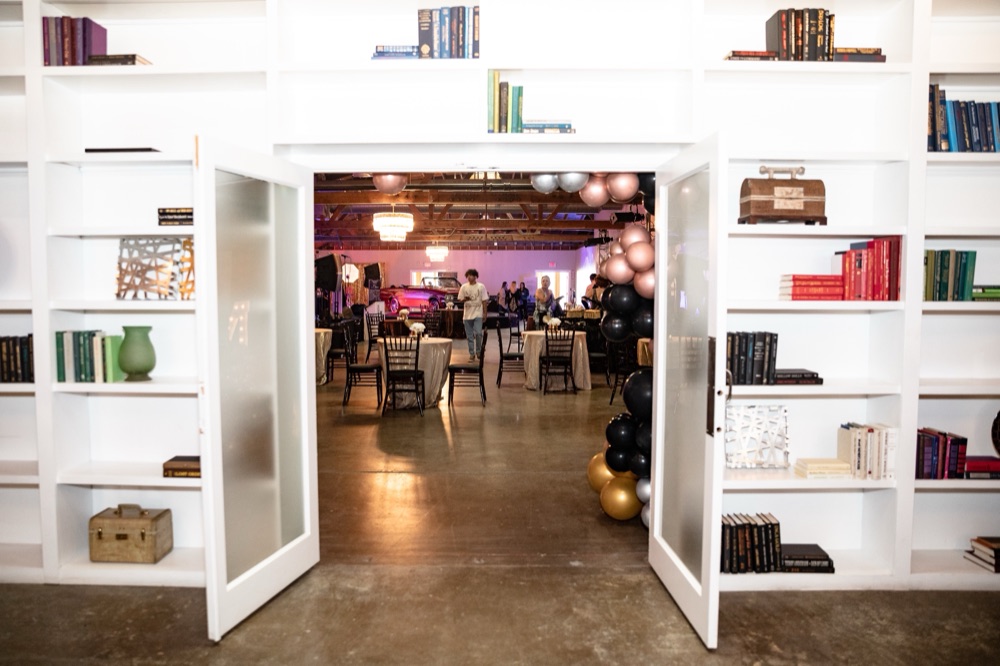
Adaptive reuse is the practice of giving an existing building a new purpose instead of replacing it. At Imagine Develops, a developer in Phoenix, Arizona, it means making a property that is no longer functional into something that is optimally utilized: the walls, structure and character stay, and the use changes.
What does "optimally utilized" mean?
It means the building does real work for its neighborhood. A building that sits empty or half used serves no one, and adaptive reuse starts by asking what the building could be doing, then shapes it to do exactly that.
How is adaptive reuse different from demolition and new construction?
Demolition removes a building and starts over, while adaptive reuse starts with what is already standing. The walls, the structure and the materials become the foundation of the new design.
That changes how a team works. New construction begins with a blank site. Adaptive reuse begins with a conversation with the building, its history and its limits. Heather Lennon puts the firm's approach simply: "We deconstruct, not demolish." Materials are salvaged, reclaimed and woven back in, so the past stays in the finished design.
What kinds of old buildings can be reused?
Almost any building with sound bones and a story can be reused, from industrial structures to storefronts to homes. The original use matters less than the potential of the place.
- Warehouses with generous open space.
- Retail buildings that can become new destinations.
- Historic homes that can be restored for a new kind of living.
- Aging commercial buildings that have fallen behind their neighborhoods.
A building that suits a restaurant may be wrong for an office, so the right choice fits both the building and the community around it. Warehouse215 is one example: a 1918 brick warehouse in the Phoenix Warehouse District that became an event venue. See the Warehouse215 project page.
Why does adaptive reuse matter in Phoenix?
Adaptive reuse matters in Phoenix because it keeps the city's character while giving neighborhoods new life. Old buildings carry the stories of the people who worked and lived in them, and once a building is gone, its stories go with it.
There is an economic case as well. A reused building can create jobs, welcome local small businesses and turn a blighted corner into a place people choose to visit. Heather Lennon calls this preservation through progress: honoring what was, and building what comes next. Her view of why ownership alone falls short is in Owning an old building is not enough.
How does an adaptive reuse project start?
A project starts with listening. Before any plan is drawn, the team studies the building, the site and the neighborhood to understand what the place needs.
"A building will speak to you if you listen," Heather Lennon says. Then comes the work of discovery. "With old buildings, she reveals herself slowly," and every project is an exercise in discovery, with surprises behind walls and beneath floors that shape the design as it goes.
From there, the steps are practical: imagining the best use, planning the design and the budget, and managing construction. Imagine General Contracting & Development (IGCD), a full-service design/build firm led by Heather Lennon, offers adaptive reuse consultation and pre-construction services to guide a project from concept to permit approval. Heather Lennon's standard for the finished project: "Make things better than when we found them."
Common questions
Is adaptive reuse the same as restoration?
Not quite. Restoration brings back a building's original details, as in the firm's historic home restoration work. Adaptive reuse gives the building a new purpose, and the two can meet on the same project.
Does adaptive reuse apply to homes?
Yes. IGCD repurposes historic structures into livable homes while keeping their character, and it also restores and preserves historic homes.
Do old buildings hold surprises?
Yes. Hidden details, old materials and unexpected conditions turn up as work proceeds. The team treats every project as an exercise in discovery and lets what it finds shape the design.
Is IGCD licensed in Arizona?
Yes. IGCD holds ROC B1 Commercial #366780, ROC B2 Commercial #278019 and ROC Residential #278020.
Does it cost anything to talk through my building?
No. The consultation with the Imagine Develops team is complimentary. Use the contact form, email imaginegc@imaginedevelops.com or call 602-456-0111.
If you own a building with a story, contact Imagine Develops to start the conversation.