
Before buying an old building in Phoenix for adaptive reuse, check six things: the structure and roof, what is hidden behind the walls, whether the City allows the use you want, any historic status, the utilities, and whether the numbers work. Get each one inspected or confirmed in writing before you close.
Why does an old building need its own checklist?
An old building is a stack of unknowns that a new one does not have. The original plans may be missing, and nobody who built it was thinking about today's codes. Imagine Develops and Imagine General Contracting & Development (IGCD), the Phoenix, Arizona design/build firm led by Heather Lennon, treat every project as an exercise in discovery. "With old buildings, she reveals herself slowly," Heather Lennon says. The checklist below pulls as much of that slow reveal as possible ahead of closing day, when it is still cheap to learn.
What should you check about the structure and roof?
Start with what holds the building up and what keeps water out. Ask a structural engineer to look at the foundation, the walls and the roof framing, and have the roof covering and drainage inspected as well.
Water is the usual culprit behind hidden damage. Look for stains, soft spots, old patches and places where the roof has been repaired more than once. A building with sound bones can be adapted for a new use. One with failing bones changes the plan, and you want to know that before the keys change hands.
What is behind the walls?
Behind the walls you may find old wiring, old plumbing and hazardous materials. Wiring and plumbing from an earlier era often cannot carry a new use, so ask a licensed electrician and a licensed plumber what they would replace.
Hazardous materials call for testing by a licensed professional. According to the U.S. Environmental Protection Agency, "In 1978, the federal government banned the sale of lead-based paint for use in homes and childcare facilities." A building from before then may still carry it on its walls and trim. Asbestos turns up in older insulation and flooring, and licensed specialists handle it. Find out what is there, and what removing it involves, before you agree to a price.
Is the use you want actually allowed?
Whether your use is allowed depends on the City's rules for the property, so the City is the one to ask. Before you close, ask the City of Phoenix about each of these:
- Zoning: does the property's zoning permit the use you have in mind?
- Change of use: does the new use count as a different occupancy, and what does that trigger?
- Parking: how many spaces does the use need, and where would they go?
- Accessibility: what does the building need so every guest can enter and move through it?
- Fire and life safety: what exits, alarms and sprinklers does the new use call for?
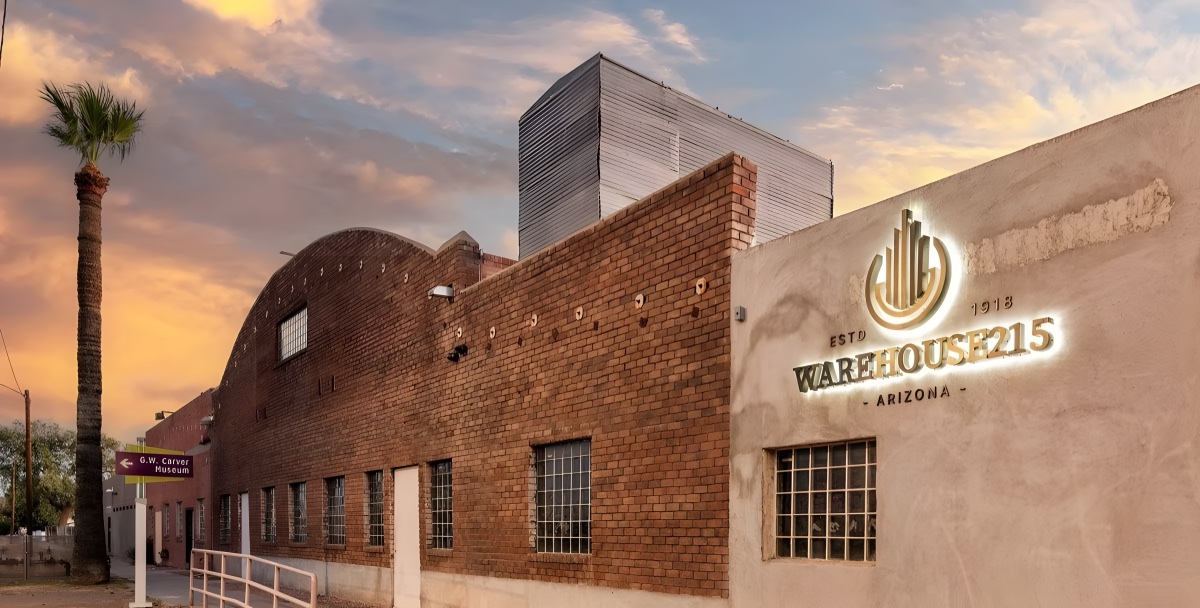
At Warehouse215, a 1918 brick warehouse in the Phoenix Warehouse District, the team doubled occupancy in a two-month permit-by-inspection remodel and rezoned a 51,000 square foot lot for valet parking. You can read the Warehouse215 story for the full picture.
The City also runs a program for this kind of work. The City says its Adaptive Reuse Program "aims to revitalize existing buildings to preserve our history, contribute to economic vitality by promoting small business, and create more vibrant neighborhoods." It is for customers looking to adapt older buildings for new business uses. Programs change, so ask the City what applies to your building today.
Does historic status change what you can do?
It can. Ask whether the building is individually listed or sits inside a historic district, because that can limit what you may change, especially on the outside. The City of Phoenix Historic Preservation Office can tell you what applies. Historic status calls for designing with the building. "We deconstruct, not demolish," Heather Lennon says, and that approach keeps original character in the finished project.
Are the utilities ready for the new use?
Utilities that served the old use may not carry the new one. A restaurant kitchen, a crowded event room and a quiet office draw very different amounts of power, water and gas, and each needs sewer and fire protection sized to match. Ask the utility providers and an engineer what the building has now, what the new use needs, and what closing the gap involves.
Do the numbers work before you close?
They have to, and you can only know once the other five answers are in. Price what you found: structural repairs, new systems, hazardous materials work, permits, parking and utility upgrades. Then leave room for what the walls still have not shown you.
Heather Lennon's line fits here: "Accept the role of visionary, but the math has to math." Price the findings first, and you are buying a project with known costs.
This is the work of IGCD's adaptive reuse consultative services and its pre-construction services, which guide a project from concept to permit approval. For the bigger picture, see what adaptive reuse is.
Common questions
Do I need an engineer before I make an offer?
Before you close, at the latest. A structural engineer's view of the foundation, walls and roof tells you whether the building can be adapted at all. Ask a licensed professional how to set up the inspection period for your purchase.
Can I test for asbestos and lead paint myself?
Hazardous materials testing is done by licensed professionals, and so is removal. Ask for a written report before closing so the findings are part of your decision.
Who decides whether my use is allowed?
The City of Phoenix does, through zoning and the building and fire codes. A seller's or broker's word does not settle it. Ask the City in writing where you can.
Is a historic building harder to adapt?
It can bring extra review, and it can also bring character no new building has. Ask the City of Phoenix Historic Preservation Office what applies, and plan the design around what the building already has.
Does IGCD help before I buy?
IGCD offers adaptive reuse consultative services tailored to each project, plus pre-construction services. The consultation with the Imagine Develops team is complimentary.
If you are weighing an old building, contact Imagine Develops and bring your questions before you close.