
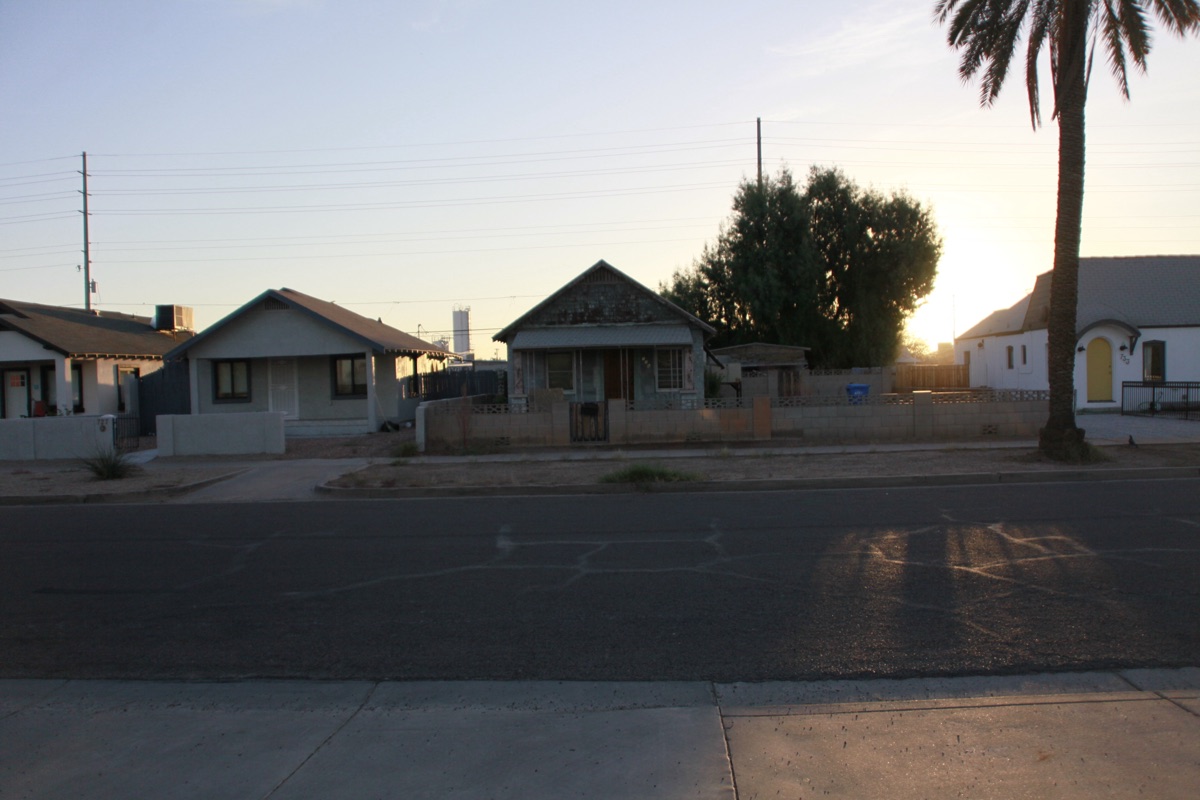
HP zoning is a Historic Preservation overlay the City of Phoenix adds on top of a property's base zoning. It puts the property on the Phoenix Historic Property Register. Exterior changes and demolition then need City review first. It is a local designation, separate from the National Register of Historic Places.
What is HP zoning in Phoenix?
It is the way Phoenix lists a property on its own historic register. The City describes the Phoenix Historic Property Register as "the City's official listing of the historic and prehistoric properties that have been deemed worthy of preservation." Properties get on it "by being rezoned with an Historic Preservation (HP) zoning overlay."
Once a property is listed, the City says it is "protected from demolition and other adverse alterations through a special development review process." Think of it as a second layer of rules on your zoning.
What is the difference between HP and HP-L?
HP-L is the higher tier. The City's Historic Preservation FAQ says "HP zoning is used for standard historic designations, whereas HP-L zoning designates properties as historic landmarks." HP-L properties must demonstrate "exceptional significance," and the FAQ says they are "subject to higher levels of protection and receive the highest priority for financial incentives."
Is the Phoenix register the same as the National Register?
No. They are two different lists with different consequences. The same City FAQ says "Properties listed on the National Register of Historic Places are not rezoned and have no formal protection, but they are eligible for incentives administered by the Arizona State Historic Preservation Office and National Park Service."
The National Park Service calls its list "the official list of the Nation's historic places worthy of preservation," and its page on the National Register is the place to start for that side. On eligibility, the City says "the eligibility criteria are the same" for both registers, though the listing process differs.
What work needs City approval on an HP property?
Anything that changes the outside of the building needs review. The FAQ puts it this way: "No building, permanent sign or other structure within an HP or HP-L overlay district may be erected, demolished, moved, restored, rehabilitated, reconstructed, altered or changed in exterior appearance without first being reviewed by the HPO." That is the City's Historic Preservation Office.
Two exclusions help owners. "Routine maintenance items, such as painting, are excluded from the review process," and the FAQ says interior work that does not impact the exterior does not require HPO review.
The City's Approvals and Guidelines page names two kinds of design approval:
- A Certificate of No Effect, which it calls "an over-the-counter staff approval that may be issued for minor work that will have no detrimental effect on the historic character of the property and which is clearly within the established General Design Guidelines."
- A Certificate of Appropriateness, which "requires a public hearing with an independent hearing officer regarding whether or not the project meets the General Design Guidelines."
City staff decide which one a project needs. For the second kind, the page says "the first step is to contact the HPO to schedule a pre-application meeting with one of the historic preservation planners."
Can an owner still demolish an HP building?
An owner can ask, but the City builds in a pause. In a listed area, the FAQ says demolition of properties that "contribute to the historic nature of the area may be delayed for up to a year while the city Historic Preservation Office (HPO) seeks alternatives to the demolition," and that properties with HP-L zoning may be delayed for up to three years. A listed property needs a Request for Demolition Approval submitted to the HPO.
That pause fits a line Heather Lennon lives by: "We deconstruct, not demolish."
What benefits come with HP zoning?
The City lists programs, and they change. The FAQ says "Owners of HP- and HP-L-zoned properties are eligible for various city programs developed to assist in local preservation efforts. These incentives vary from year to year and include community education workshops, technical and design assistance, and the historic district sign program."
It adds that these properties "are also eligible for financial assistance from the Historic Preservation Bond Fund." The FAQ points owners to the City's incentives page for what is currently available.
How can an owner check whether a property is listed?
Check the register, the zoning and the district maps. The FAQ describes two checks: look at the register listing, and "check the zoning for the property" for an HP or HP-L suffix. It also warns that "even if the property is not listed individually, it may still be located within the boundaries of a listed historic district."
- Look your address up on the Phoenix Historic Property Register.
- Check the base zoning for an HP or HP-L suffix on the City's zoning maps.
- Check the City's district maps in case you sit inside a listed district.
- Check the National Register separately through the National Park Service.
How does HP zoning fit adaptive reuse?
It fits well when planned early. Adaptive reuse means making a property that is no longer functional into something that is optimally utilized. An HP overlay adds a layer of review to that work: changes to the exterior go past the City first.
Imagine Develops is a Phoenix developer, and Imagine General Contracting & Development (IGCD) is the design/build firm led by Heather Lennon. Imagine Develops took on the 1918 brick warehouse that became Warehouse215, and Imagine Coronado is in development.
As Heather Lennon says, "A building will speak to you if you listen." The register is part of how Phoenix listens too. For the City's own program, see our guide to the Phoenix Adaptive Reuse Program, and for the broader idea, what adaptive reuse is. Buying? Read the checklist for buying an old building in Phoenix first.
Common questions
Does HP zoning replace my base zoning?
No. It is an overlay, so it sits on top of the base zoning. The City says to look for an HP or HP-L suffix to the base zoning.
Do I need approval to paint my building?
Generally no. The City says "Routine maintenance items, such as painting, are excluded from the review process," and that the HPO "does not regulate paint colors." It does discourage painting masonry that has never been painted.
Does interior work need HPO review?
Not when it does not affect the exterior. The City's FAQ says interior work that does not impact the exterior does not require HPO review.
Is a National Register listing the same as HP zoning?
No. The City says National Register properties "are not rezoned and have no formal protection." Phoenix register properties are rezoned and protected through City review.
How do I ask the City to list my property?
Put it in writing. The FAQ says to review the eligibility criteria and the procedures for requesting historic designation, then "submit a written request" to the Historic Preservation Office.
If you own an older building in Phoenix and want a clear read on what an overlay could mean for it, contact Imagine Develops to talk it through.